Will laser cleaning damage materials?
Laser cleaning technology is gaining popularity in industrial manufacturing, artifact restoration, a...
The main difference between air-cooled and water-cooled laser cleaning machines lies in their heat dissipation mechanisms: air cooling uses a fan and heat sink to force air circulation to cool the laser source, while water cooling uses a water pump to circulate coolant (such as distilled water) to absorb heat and dissipate it through a radiator.
Air-cooled systems are simpler, requiring no water tank, and are suitable for portable applications; water-cooled systems are more complex but offer higher cooling efficiency, making them suitable for high-power applications. Overall, air-cooled models are smaller and lighter (typically 35-50kg), making them easier to move, while water-cooled models are heavier (85kg+), but offer greater stability.
| Aspect | Air-Cooled | Water-Cooled | Key differences and data support |
| Cooling mechanism | Fan + heat sink forced air circulation | Water pump circulating coolant + radiator | Air cooling is simple, while water cooling is highly efficient (2-3 times stronger heat dissipation capacity). |
| Weight/volume | Lightweight (35-50kg), compact size | Heavier (85kg+), requires a water tank | Air-cooled design makes it more portable and easier to move. |
| Power Applicable | Low to medium power (100-1000W) | High power (1000-6000W+) | Water cooling supports higher power output |
| Cleaning efficiency | 15-20㎡/h | 25-35㎡/h+ | Water cooling efficiency is 30%-50% higher. |
| Continuous working time | 24 hours (intermittent cooling required) | 72 hours+ non-stop operation | Water cooling has strong stability |
| Operating temperature range | -20℃~50℃, resistant to extreme cold/high temperature | -10℃ to 60℃, antifreeze required. | Air cooling is better suited for extreme environments |
| Maintenance difficulty | Simple (dust filter) | Complex (water change, antifreeze, circulation check) | Air-cooled systems have 50% lower maintenance costs. |
| Initial/Operating Costs | Low (20%-30% less) | High (water tank system increased by 15%) | Air cooling has a low entry barrier |
| Advantage | Portable, low cost, easy maintenance, strong outdoor/extreme cold weather performance, and no risk of leakage. | High efficiency, strong stability, supports high power and heavy pollution tasks | Air cooling is flexible, water cooling is efficient. |
| Shortcoming | Limited cooling capacity, low efficiency, unsuitable for heavy/long-term use. | Heavy, inconvenient to carry, complex to maintain, and requires a water source. | / |
| Application scenarios | Outdoor construction, ship/cultural relic restoration, mobile factories, light to moderate rust removal (such as paint removal from buildings, on-site maintenance). | Indoor fixed production lines, large-area cleaning, and heavy-duty tasks (such as rust removal from car/train carriages and factory pipeline maintenance). | Air cooling is suitable for flexible applications, while water cooling is suitable for industrial-scale applications. |
Recommendation: For SMEs or on-site operations, air cooling is preferred (portability + low cost); for large factories or high-intensity production, water cooling is preferred (efficiency + stability). Actual selection needs to be assessed based on contaminant thickness, environmental conditions, and budget. ROI is typically 6-12 months. If you have any questions, please feel free to contact us. We will provide you with the most suitable and cost-effective solution!
Laser cleaning technology is gaining popularity in industrial manufacturing, artifact restoration, a...
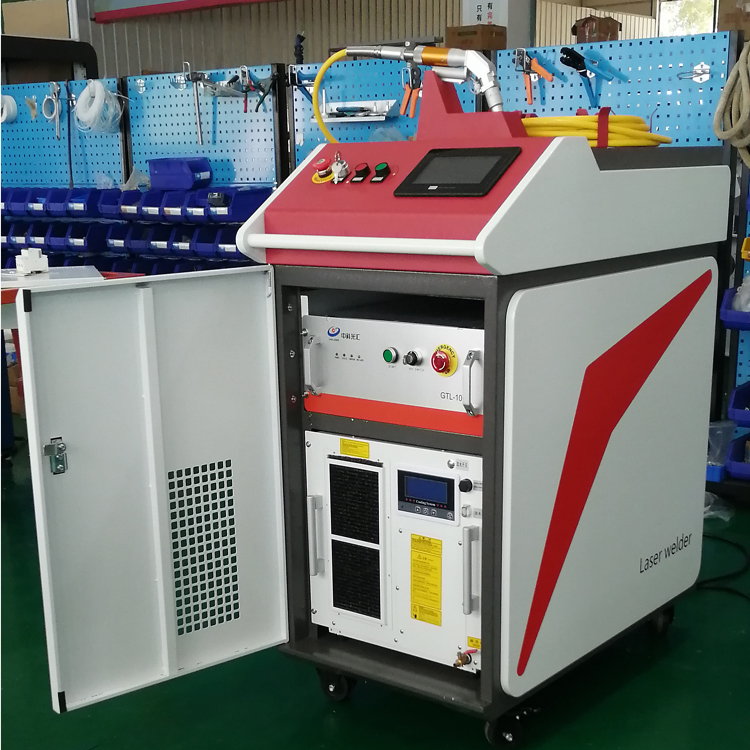
A laser welding machine is an advanced welding device that uses a high-energy laser beam as a heat s...
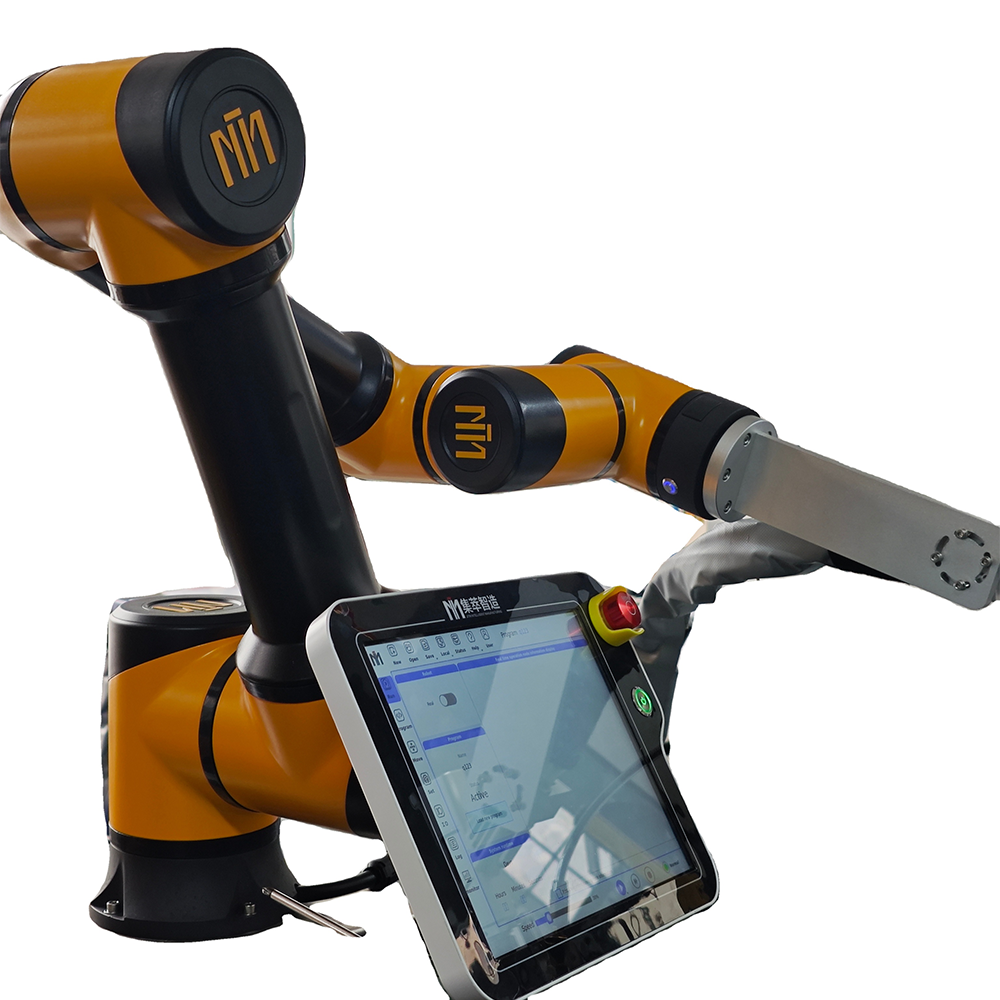
Laser welding robots at work – the "intelligent arms" of precision manufacturing.
Against the backdrop of a laser welding machine market projected to reach $8.5 billion by 2025 with ...